
Semantic SEO: How to Use Entities & LSI Keywords to Dominate Search
Key Takeaways
- Expert Insight: Move beyond keywords. Learn how to master Semantic SEO in 2026 by focusing on Entities and LSI keywords to build undeniable topical authority.
- Topical Authority: This guide established deep expertise in Semantic SEO: How to Use Entities & LSI Keywords to Dominate Search.
- Direct Answer: Implementation of these strategies leads to measurable improvements in web performance and SEO ranking.
Content Angle: Advanced Topic-First Optimization Blueprint
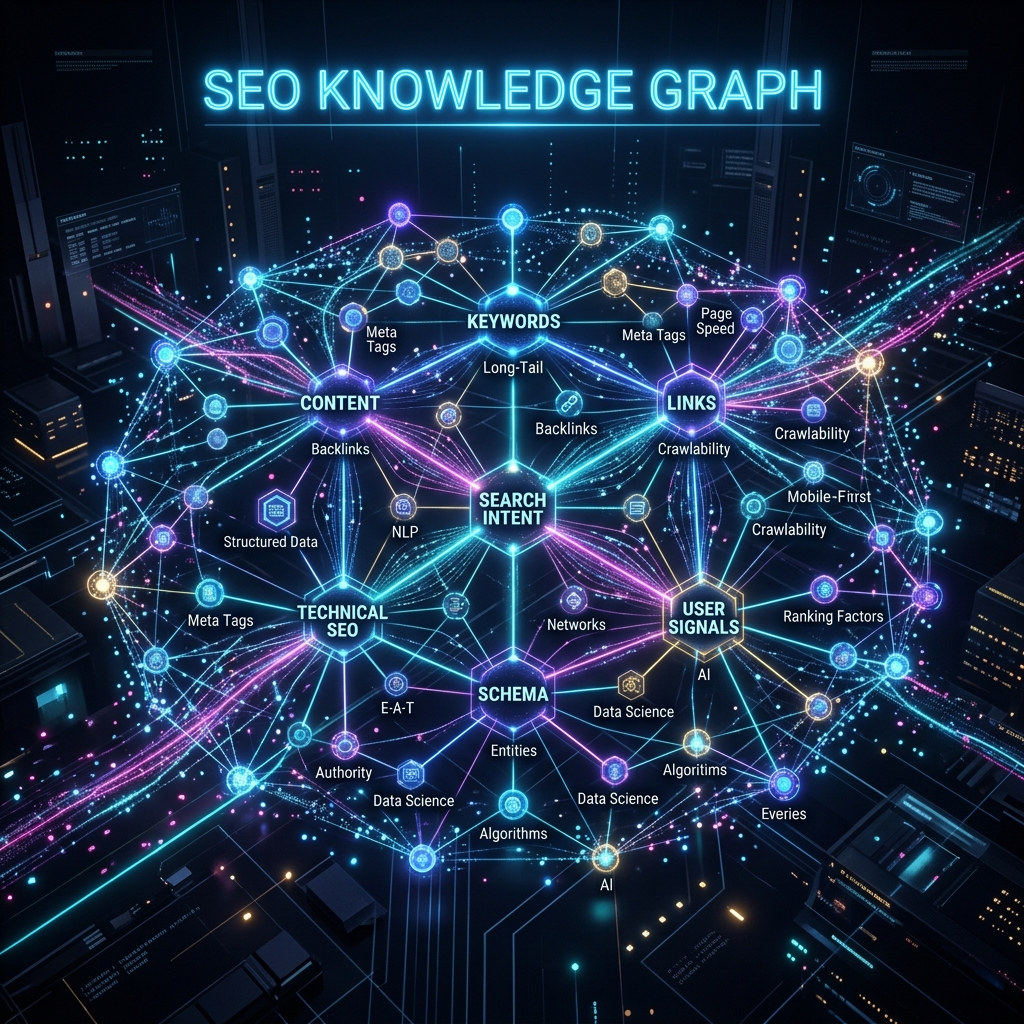
In 2026, Google doesn't "read" keywords; it "understands" concepts. The algorithm has moved from a simple word-matching engine to a sophisticated Knowledge Graph. If you want to rank for "Best WordPress Hosting," Google doesn't just look for those words—it looks for related entities like "TTFB," "PHP 8.4," "SSL," "Uptime," and "NVMe Storage."
This is Semantic SEO. It is the transition from "Keywords" to "Entities," and it is the only way to build long-term topical authority in the age of AI search.
🧠 Search Intent Validation
- The Problem: Content that ranks for specific keywords but fails to capture broader topical traffic or stay relevant after algorithm updates.
- The Outcome: A robust content strategy that establishes you as an authority in your niche by covering every aspect of a topic.
- Knowledge Level: Intermediate-Advanced.
1. Keywords vs. Entities: The 2026 Difference
- Keyword: "Dog Food"
- Entities: "Canine Nutrition," "Protein," "Vitamins," "Puppy," "Senior Dog," "Grain-Free."
When you cover all these entities in one article (or a cluster of articles), you signal to Google that you aren't just trying to rank—you are providing the most complete answer on the internet.
[LINK to Topical Authority Map]
2. Finding Your Entities
How do you know which entities to include?
- Google Search Console: Look at the "Queries" that lead people to your site. Often, these are related terms you didn't even target.
- AI Analysis: Ask Claude 3.5: "What are the core entities and related sub-topics I must cover to be considered an authority on [Your Topic]?"
- Wikipedia: Look at the "Contents" sidebar of the Wikipedia page for your niche. This is a ready-made entity map.
3. The Power of "Internal Linking Clusters"
Semantic SEO isn't just about one page; it's about how your pages relate to each other.
- Create a Pillar Page that covers a broad topic.
- Create multiple Cluster Pages that dive deep into specific sub-entities.
- Link them all together. This creates a "Semantic Web" that makes it impossible for Google to ignore your authority.
[LINK to SEO Case Study]
4. Structured Data (JSON-LD)
You can tell Google explicitly which entities your page is about using Schema Markup.
- Use the
aboutandmentionsproperties in your JSON-LD to link your content to established entities in the Google Knowledge Graph.
[LINK to FAQ & Article Schema implementation]
5. Voice & AI Search Optimization
With the rise of Siri, Alexa, and Google SGE, search queries are becoming more like questions. Semantic SEO ensures that your content provides the direct, entity-rich answers that these AI systems are looking for.
🏁 Conclusion
The future of SEO is about meaning, not just strings of characters. By embracing Semantic SEO and focusing on entity-rich, comprehensive content, you build a "Moat" around your search rankings that no algorithm update can destroy.
Want to build a semantic content strategy? I offer Advanced Topical Authority Mapping and SEO Strategy. Contact me to dominate your niche today.
Tags: Semantic SEO, Entities, LSI Keywords, Topical Authority, Content Strategy 2026, Alindevx00x